No Results Found.
The page you requested could not be found. Try refining your search, or use the navigation above to locate the post.


READING LIST
Five Cold War spy novels, written between 1962 and 2002, picked for how well they show tradecraft, mole hunts, defections and the bureaucracy behind intelligence work. Each entry gives the first publisher and year, then an ISBN for a current paperback you can order today.
ISBN note: books published before 1970 had no ISBN on the first edition, so those entries list a modern reprint. Where a first-edition ISBN exists, it is given too.
Plot: Leamas runs the Circus’s Berlin station until his last agent is shot at the Wall. Control offers him one final job: fake a slide into drink and disgrace so the East Germans will recruit him as a defector. His goal is to feed them evidence that Mundt, head of the Abteilung, works for London. The operation turns out to have a purpose Leamas was never told, and Liz Gold, a young communist librarian he met in London, is drawn into it.
Why it’s here: It set the standard for the realist spy novel. Le Carré worked for MI5 and MI6, and the book shows a field officer as an expendable tool of his own service. Study it for how a deception operation is built in layers, with the agent himself kept in the dark.
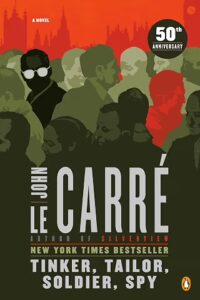
Plot: A junior officer, Ricki Tarr, surfaces with a claim that a Soviet mole sits at the top of the Circus. Forced into retirement after a failed operation in Czechoslovakia, Smiley is quietly brought back by a Cabinet Office official to find him. Working from files and interviews outside the building, Smiley narrows the list to four senior men, code-named Tinker, Tailor, Soldier and Poorman. The trail leads back to Karla, his opposite number in Moscow.
Why it’s here: It is the definitive mole-hunt novel, drawn from the Kim Philby case. Almost all the detective work is done through paper: registry records, expense claims, and the memories of retired officers. It is a strong model for counterintelligence work that happens at a desk.
Plot: Leading British scientists are disappearing, and some come back unable to do their work. The narrator, a working-class former army sergeant, is moved to WOOC(P) under Dalby and told to find out who is behind it. The trail runs through a London broker of stolen talent named Jay, a deal in Beirut, and a nuclear test in the Pacific. He learns IPCRESS is a brainwashing method, and then he is captured and subjected to it.
Why it’s here: Deighton’s narrator complains about expense forms, pay grades and his bosses’ accents, a sharp break from the James Bond model of 1962. The book’s footnotes and appendices on tradecraft read like a working manual. Use it as a model for a first-person intelligence voice with an attitude toward his own service.
Plot: Brahms Four, the Department’s best source in East Germany, wants out. He is convinced a senior officer in London is about to burn him and will trust only one man: Bernard Samson, a field agent who has spent five years behind a desk. Samson goes back into Berlin to arrange the extraction. Along the way he has to work out who in his own office is feeding Moscow, and the answer sits closer to home than he wants it to.
Why it’s here: It opens a nine-book cycle (Game, Set and Match; Hook, Line and Sinker; Faith, Hope and Charity), which makes it a useful study in sustaining one mole plot across a series. Samson is a mid-career officer stuck under less able managers, and office politics drive as much of the danger as the opposition does.
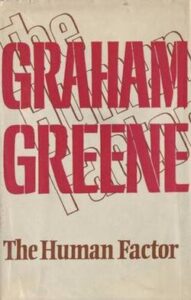
Plot: Castle is a quiet, aging desk officer in MI6’s Africa section. A leak is traced to his small office, and the security chief and the service doctor decide the guilty man is his young colleague Davis. They deal with him without proof. Castle knows they are wrong. Years earlier, while posted to South Africa, he fell in love with Sarah, a Black woman, and a communist contact helped her escape the apartheid police. He has been repaying that debt to Moscow ever since.
Why it’s here: Greene served in MI6 during the Second World War under Kim Philby. This is the best novel on this list about why a loyal officer betrays his service, told from inside the traitor’s head. It also shows how an internal security investigation can reach the wrong conclusion and act on it.
The page you requested could not be found. Try refining your search, or use the navigation above to locate the post.
The page you requested could not be found. Try refining your search, or use the navigation above to locate the post.
The page you requested could not be found. Try refining your search, or use the navigation above to locate the post.
The page you requested could not be found. Try refining your search, or use the navigation above to locate the post.
The page you requested could not be found. Try refining your search, or use the navigation above to locate the post.
The page you requested could not be found. Try refining your search, or use the navigation above to locate the post.
The page you requested could not be found. Try refining your search, or use the navigation above to locate the post.


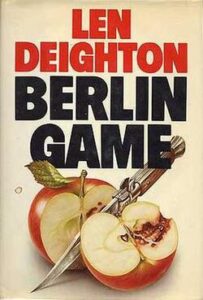
Brahms Four, the best British agent in East Germany, wants out, and Bernard Samson is the man sent to bring him across. Samson once ran agents in Berlin. Now he sits behind a London desk, working for a superior he does not respect. When the KGB seems to know the Service's plans before they are made, Samson has to ask who in London Central is passing them on. The answer takes him through East Berlin and into his own marriage. Len Deighton's first Bernard Samson novel is a Cold War thriller about
View Work