No Results Found.
The page you requested could not be found. Try refining your search, or use the navigation above to locate the post.

READING LIST
2026-11-20
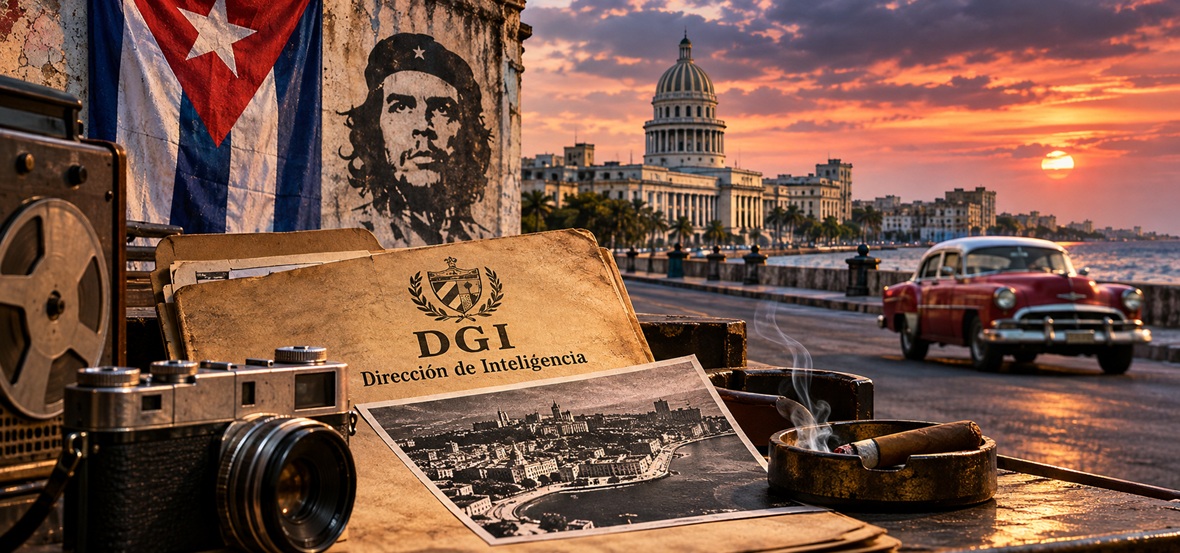
Ten novels about Cuban intelligence services and the spies who worked against them, published between 1958 and 2017 (one Spanish original dates from 2009). Three authors were born in Cuba: Arnaldo Correa, José Latour and Leonardo Padura. Spy's Fate and Comrades in Miami put Cuban intelligence officers at the center, and Havana Libre is built on the real Wasp Network. Our Man in Havana, Mongoose, R.I.P. and The Good Assassin show British and American services working in Cuba before and after the revolution. The Cuban Affair and Havana Queen are commercial thrillers with Cuban security as the threat. Two books need a caveat. The Good Assassin is set before Castro took power, and The Man Who Loved Dogs features Soviet intelligence in a Cuban story. Agencies on the page: MI6, the CIA, the FBI, the DGI and Cuban state security, and the NKVD. Settings are Havana, Miami, Key West and the Cuban countryside. Entries are in publication order.
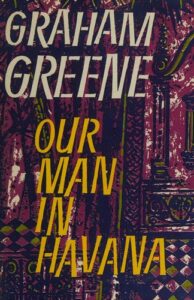
Jim Wormold, an English vacuum cleaner salesman in Havana, is recruited by MI6 to run a network of agents. He has no agents, so he invents them, and sends London sketches of secret military installations that are really drawings of vacuum cleaner parts. London believes every word. Then real people start to die and Captain Segura, the police chief who wants to marry Wormold’s daughter, begins to take the invented network seriously.
The foundation of the subgenre. Greene wrote it just before the revolution, and it shows an intelligence service paying for fiction because the fiction fits what headquarters wants to hear. Start here for tone and for the Havana setting.
Mongoose was the code name for the American operation to remove Castro. CIA officer Blackford Oakes, the hero of Buckley’s long-running series, is pulled into the plan in 1963, when the Kennedy administration is still looking for a way to get rid of the Cuban leader. Buckley mixes real events and invented ones, as he does in the rest of the series.
This is the American side of the Cuban contest in novel form. Kirkus called it Buckley’s best Blackford Oakes thriller. It gives readers the CIA view of Castro that the Cuban-written books on this list answer.
Moscow investigator Arkady Renko, depressed after the death of his wife, travels to Havana after a Russian friend is reported dead. The body is found in the bay. Renko works with Havana police detective Ofelia Osorio, and the two uncover a conspiracy that reaches well beyond the island.
Cruz Smith writes Havana in the Special Period with a precision that earned the book the 1999 Hammett Prize. A Russian protagonist in Cuba gives the list a view of post-Soviet Cuba from outside both Washington and Havana.
Carlos Manuel is a veteran Cuban intelligence officer with 25 years of service. After his wife’s suicide he is recalled to Havana, only to find himself without work once the Soviet Union stops supporting Cuba. When US and Cuban services each believe the other has a high-level defector, a manhunt follows in which both sides blunder.
Correa is a Cuban author who worked on Cuban projects abroad, and Publishers Weekly praised its picture of Castro’s intelligence service. It is the list’s clearest portrait of a Cuban intelligence officer from the inside, and it is unflattering to both services.
Colonel Victoria Valiente, a psychologist and the most respected officer in the DGI, runs Cuban intelligence’s Miami desk. She and her husband Manuel Pardo, a computer expert at the Interior Ministry, are disillusioned with the regime and plan to defect with about $2.7 million siphoned from the government. The FBI has coerced Elliot Steil, a Cuban exile in Miami, into helping, and all the players end up in the same city.
The most detailed fictional account of the DGI at work, with a woman spymaster at the center. Latour left Cuba and writes with an insider’s feel for both cities. Martin Cruz Smith called him a master of Cuban noir.
Fidel Castro dies and Cuba erupts in political turmoil. Larisa Montilla, a Cuban spymaster, fights the CIA in a shadow war of assassination to save the regime. FBI agent Nick Castillo defies orders and travels to Havana in secret.
It imagines the post-Castro transition, which none of the other books attempt. Bruno is a former diplomat and military intelligence officer with time served in Cuba. It is a fast commercial thriller and less literary than most of this list.
Iván, a Cuban writer reduced to proofreading at a veterinary journal, meets a foreigner walking two borzoi on a beach near Havana in the 1970s. The man is Ramón Mercader, the NKVD agent who killed Trotsky in Mexico in 1940. The novel moves between Iván’s life in Cuba, Mercader’s training and Trotsky’s exile.
The CIA’s own Studies in Intelligence journal reviewed it as a spy novel that rises to literature. The intelligence service on the page is Soviet, not Cuban, but a Cuban writer places an NKVD killer in Havana, which gives the list a long, serious book about what revolutions do to the people who serve them.
Retired CIA officer George Mueller goes to Havana in August 1958, supposedly to write a magazine article. His real task is to find out whether Toby Graham, a CIA officer and old friend, is diverting weapons to Castro’s rebels in defiance of the US arms embargo. The FBI, the CIA and the State Department are each trying to shape the outcome of the revolution.
This is the only book set in the last months before Castro, and it covers American intelligence rivalries over Cuba. Cuban intelligence is not its subject, so read it as background for the others. It follows the Greene and le Carré tradition.
Mac MacCormick, an Army veteran who runs a fishing charter in Key West, is hired by a group of Cuban exiles to help retrieve about $60 million in cash hidden in Cuba since the revolution. If he succeeds he gets rich. If Cuban security catches him, he does not come back.
A New York Times bestseller and the most accessible book here, written in DeMille’s wry first-person voice and set in Cuba as it opened to American visitors. Cuban counterintelligence is the threat throughout.
In summer 1997 bombs hit Havana hotels and Mano Rodriguez, a pediatrician, cannot save one of the victims. Colonel Emilio Pérez, who has held a grudge against him, recruits him into the Wasp Network for an undercover job in Miami, where he must find the exiles behind the bombings.
It is based on the real Wasp Network and the 1990s hotel bombings, and it is the book on this list that most directly covers the Cuban Five case. It is short, and the Special Period details come from the author’s own trips to Cuba. It follows Arellano’s Edgar-nominated Havana Lunar but stands alone.
The page you requested could not be found. Try refining your search, or use the navigation above to locate the post.
The page you requested could not be found. Try refining your search, or use the navigation above to locate the post.
The page you requested could not be found. Try refining your search, or use the navigation above to locate the post.
The page you requested could not be found. Try refining your search, or use the navigation above to locate the post.
The page you requested could not be found. Try refining your search, or use the navigation above to locate the post.
The page you requested could not be found. Try refining your search, or use the navigation above to locate the post.
The page you requested could not be found. Try refining your search, or use the navigation above to locate the post.