READING LIST
Atomic Spies
2026-11-21
About This Reading List
Ten novels published between 1971 and 2025 about spies who passed atomic secrets to the Soviet Union and the investigators who hunted them. Four books are built on real cases: the Rosenbergs (The Book of Daniel and The Public Burning), Harry Gold (Harry Gold) and Melita Norwood (Red Joan). Klaus Fuchs appears as a character in Stallion Gate, Harry Gold and The Berlin Exchange. The Fourth Protocol is the one invented plot, and its stolen papers are NATO defence documents rather than bomb designs.
Settings include Los Alamos, New York, Chicago, Cambridge, London, East Berlin and rural Britain. Agencies on the page are the FBI, US Army security, MI5, MI6, the KGB, the GRU and the SAS. The books run from mole hunts and murder mysteries to satire and literary fiction, so readers can pick by mood. Entries are in publication order.
At A Glance
- 10
- Alexander Hale
- Historical Era
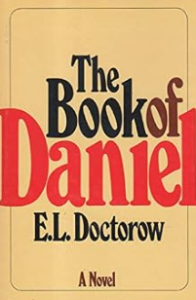
The Book of Daniel
E. L. Doctorow .
1971, Random House
978-0-394-46271-4
New York area, 1960s, with flashbacks to the 1930s to 1950s
Array
Daniel Isaacson, Susan Isaacson, Paul and Rochelle Isaacson
Daniel Isaacson, a graduate student in the 1960s, tries to understand the trial and execution of his parents, Paul and Rochelle, convicted of passing atomic secrets to the Soviet Union. The Isaacsons stand in for Julius and Ethel Rosenberg. The novel follows Daniel and his sister Susan as they deal with the case, the left-wing politics around it and what it did to their lives.
This is the first major American novel built on the Rosenberg case. Doctorow keeps the question of guilt open and shows the cost to the children, which gives the list a view from outside the spy ring.
The Public Burning
Robert Coover .
1977, Viking Press
978-0-670-58200-6
United States, June 17 to 19, 1953; the execution staged in Times Square
Array
Richard Nixon (narrator), Uncle Sam, Julius and Ethel Rosenberg, Dwight Eisenhower, Joseph McCarthy
Vice President Richard Nixon narrates the last days before the Rosenbergs are executed for passing atomic secrets to the Soviets. Coover turns the execution into a public rally in Times Square and mixes real figures with invented ones such as Uncle Sam.
It shows how fear of atomic espionage drove American politics in the early 1950s. It is satire, long and demanding, and suits readers who want the political side of the Rosenberg story.
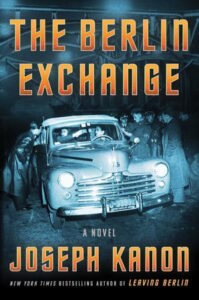
The Berlin Exchange
Joseph Kanon .
2022, Scribner
978-1-9821-5865-1
East Berlin, 1963, with the Manhattan Project and Harwell in the past
Array
Martin Keller, Sabine, Peter, Kurt Thiele, Stefan Schell, Klaus Fuchs
Martin Keller, an American physicist, gave Manhattan Project secrets to the Soviets and kept spying at Harwell until he was caught. After ten years in an English prison he is freed in 1963 in a spy swap and sent to East Berlin. He reunites with his ex-wife Sabine and their son Peter. East German officials want him for their nuclear program and Western intelligence pressures him to work for them. He plans an escape for his family.
Why It’s Here:
This book follows the spy after the spying. It shows the cost to a man who thought he was helping the world and ends up as a trading piece between governments. Fuchs appears as a character.
Books In List
WORK 02 | W0001180
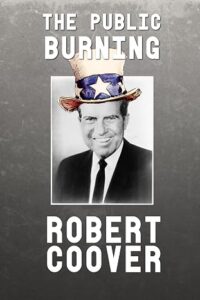
The Public Burning
Vice President Richard Nixon narrates the last days before the Rosenbergs are executed for passing atomic secrets to the Soviets. Coover turns the execution into a public rally in Times Square and mixes real figures with invented ones such as Uncle Sam.
View Work
WORK 04 | W0001187
The Berlin Exchange
Martin Keller, an American physicist, gave Manhattan Project secrets to the Soviets and kept spying at Harwell until he was caught. After ten years in an English prison he is freed in 1963 in a spy swap and sent to East Berlin. He reunites with his ex-wife Sabine and their son Peter. East German officials want him for their nuclear program and Western intelligence pressures him to work for them. He plans an escape for his family.
View Work