
A razor-sharp, modern espionage thriller
Radiant Sentry is a smart, relentless spy novel that blends cutting-edge technology with classic counterintelligence tension. The pacing is tight, the stakes feel real, and the characters—especially Will Morgan and Team Watchtower—carry both authority and humanity. What begins as a shadowy investigation quickly unfolds into a global battle over power, loyalty, and the future of modern warfare. Meticulously researched, politically sharp, and impossible to put down, this is a must-read for fans of intelligent, high-stakes espionage thrillers. Tom Clancy readers will love this book.
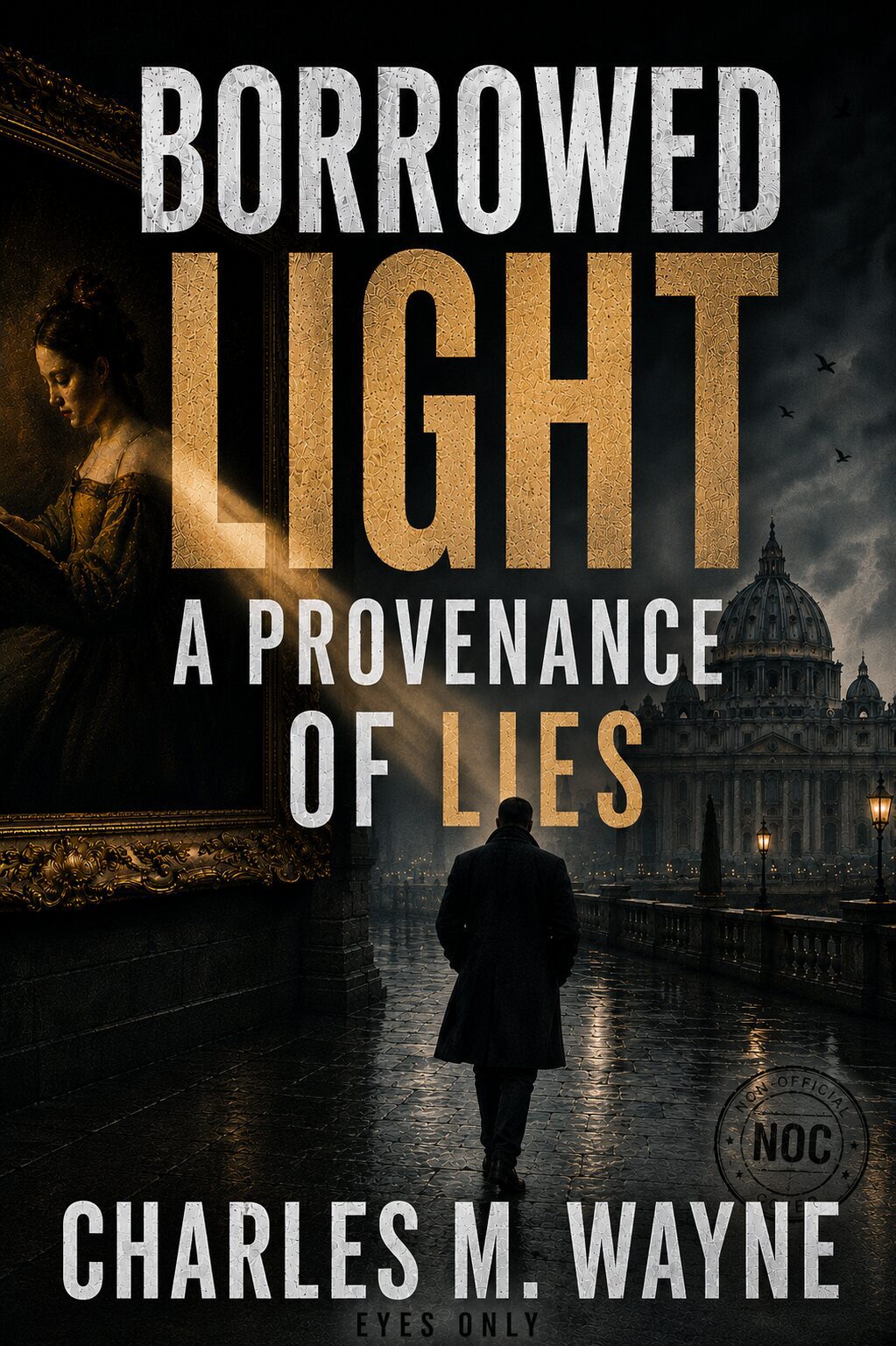
Borrowed Light
A Provence of Lies
Coming 2027
Berlin, Germany–0217 Hours Alpha
The rain had stopped minutes ago, but the alley still held it. Slick pavement reflecting the pulse of blue lights. Water dripped steadily from a rusted fire escape, each drop landing with quiet precision, like a metronome no one noticed.
The body was already bagged. Too fast. Daniel Voss, arrived quickly from the nearby US Embassy and stood just outside the police tape, hands in the pockets of his coat, posture loose but deliberate. He looked like a man waiting for someone. He wasn’t.
A uniformed German officer approached him, cautious but professional.
“You are with the Americans?” the officer asked.
Voss nodded once. “I’d like a look at the scene.” He said as he flashed his Defense Counterintelligence and Security Agency (DCSA ) shield.
The officer hesitated, eyes flicking briefly toward the cluster of investigators deeper in the alley. Jurisdiction lived in that hesitation.
Then he lifted the tape.
“Bitte.”
Voss ducked under without another word.
Inside the perimeter, the noise changed. Radios murmured. Evidence markers dotted the ground. A forensic team worked methodically near where the body had been.
Voss didn’t go there. That was where everyone started. That was where assumptions formed. Instead, he moved to the edges. A recessed doorway. A drainage channel. A narrow break between two buildings where the light failed to reach.
He crouched briefly, studying the ground without touching it. No scatter. No displaced debris. No sign of sudden movement. He straightened slowly and turned his gaze toward the chalk outline marking where the body had fallen. Clean. Too clean.
A plainclothes detective stepped toward him, hands tucked into his coat against the cold.
“We believe two assailants,” the detective said. “They took wallet, watch.”
His English was precise, rehearsed.
Voss gave a small nod, as if agreeing.
“And the phone?” Voss asked.
The detective frowned slightly. “Also missing.”
“Unlocked?” Voss asked.
“We don’t know yet.”
Voss let the silence sit for a moment, then inclined his head. “Of course.”
He walked past the outline without slowing. Three steps beyond it, he stopped. Then he looked up. A second-floor window across the alley stared back at him, dark, unremarkable, easy to ignore.
Voss took a step to his left. Then another. Adjusting the angle. Rebuilding the geometry.
He exhaled slowly. The shot hadn’t come from arm’s length. It hadn’t come from panic or proximity. It had come from distance. From patience. From there.
“Sir?”
A forensic technician approached, holding a clipboard. “Personal effects list,” she said.
Voss took the sheet and scanned it quickly.
Wallet—missing.
Watch—missing.
Cash—minimal.
He read it again, slower.
No mention of the device.
He looked up. “He carried a second phone.”
The technician blinked. “We didn’t find one.”
“I know,” Voss said, handing the clipboard back.
He stepped away from the cluster of investigators, moving toward the mouth of the alley where the light softened and the noise faded. Behind him, the detective continued speaking with his team, building a case that already felt complete. Voss reached into his coat and pulled out his phone. He didn’t dial immediately. Instead, he glanced once more toward the second-floor window.
Someone had stood there.
Watched.
Waited.
This wasn’t a robbery interrupted by violence.
This was violence, dressed as robbery.
He tapped the screen and brought up a secure line.
The call connected on the first attempt.
“Voss,” he said.
A brief pause, then a familiar voice answered.
“You’re late,” Will Morgan said.
Voss allowed the faintest trace of a smile. “You’re already looking at it?”
“CID thinks it’s a robbery,” Will said.
Voss shifted his weight, eyes still on the alley. “Local police think so too.”
A beat passed.
“They’re wrong,” Will said.
Voss nodded, though Will couldn’t see it. “Yes.”
“What do you have?” Will asked.
Voss glanced back toward the chalk outline. “Selective removal,” he said. “Not opportunistic.”
He paused, choosing the next words carefully.
“No disruption at the scene. No struggle.”
Silence held for a moment on the line.
That was enough for Will.
“Anything else?” Will asked.
Voss looked up again at the window, at the empty darkness that concealed more than it revealed.
“Yes,” he said quietly.
A beat.
“Your soldier wasn’t approached.”
He let that settle.
Then he finished it.
“He was observed.”
The line went still.
Not confusion.
Recognition.
Voss ended the call without another word.
He slipped the phone back into his coat and stepped out from under the tape.
Behind him, the investigation continued—orderly, logical, wrong.
Will sat with the call for a moment after it dropped.
He thought about the second-floor window Voss had described. The one that had stared back at the alley while a man was killed beneath it. The shooter hadn't generated the light he needed to do the work — he'd used what was already there. The streetlamp at the alley mouth. The reflected glow off wet pavement. The pulse of a security door's indicator across the way. Whatever the city had been giving away for free.
Borrowed light.
The moon did it. Forgers did it. Intelligence services did it — using somebody else's infrastructure, somebody else's relationships, somebody else's trust, to illuminate a target they had no right to see.
He pulled up a new file. He typed two words into the designation field and left it open.
BORROWED LIGHT.
He'd tell Graham in the morning..
* * *
Fort Meade — Watchtower Ops 1247 Hours R
Cathy was the first to notice.
She had been running the pattern expansion Sara had asked for that morning — Berlin outward, EUCOM and beyond, looking for any incident in the prior ninety days that carried the same signature as Kane's alley. Targeted collection dressed as something ordinary. She had been at it for four hours and had found nothing useful.
Then SYBIL surfaced something she hadn't asked for.
A spike in encrypted traffic through the Washington embassy's cultural section, running across the seventy-two hours preceding Kane's death. Not the operational windows themselves — those were always encrypted and always present. The coordination traffic underneath them. The small bursts that meant someone in Yasenevo was talking to someone in DC with more frequency than the baseline allowed.
Cathy stared at it for a moment.
Then she pulled the comparable window from Berlin. The Washington traffic had a mirror — smaller, intermittent, but present. Two cities, one rhythm, four days before a U.S. soldier was shot from a second-floor window.
She walked to Sara's office.
Sara looked up.
"What."
"I don't know yet." Cathy held the tablet out. "Maybe nothing. The cultural section's been running hot. The same window shows up in Berlin."
Sara read it.
Then she read it again, the way she read things when she didn't want to commit to a conclusion yet.
"Two cities," she said.
"Yes."
"Anything domestic?"
Cathy hesitated. "There's a transport scheduled into Hartford this afternoon. North American Mutual coverage. The Stevens Collection — high-value, the carrier flagged it last week for the threat brief. I noticed it because the cultural section's Washington window touched the carrier's pre-shipment notification."
Sara was quiet.
"Touched how."
"Forty minutes after the carrier filed the route. Coordination spike from the cultural section." Cathy paused. "It could be coincidence. The cultural section runs a lot of traffic."
"It could be."
Sara handed the tablet back.
"Flag the transport," she said. "Soft flag. I don't want a panic. Just — if anything happens to that shipment in the next forty-eight hours, I want to know inside an hour."
Cathy nodded.
She went back to her station.
Behind her, SYBIL's status light pulsed amber in its rack, patient, having done what she did, which was put two cities on the same screen and wait.
* * *
Chapter Two
Twenty-five-year man
Berlin–Municipal Surveillance Coordination Office 0242 Hours Alpha
The room was too warm for the hour.
Banks of monitors threw cold blue light across scuffed desks, empty chairs, a row of half-dead coffee cups. The kind of room that never fully closed, staffed by whoever drew the short straw. One technician in a gray sweater sat slumped at the center console, footage running silently in front of him. He was rubbing his eyes when Voss walked in.
He didn't announce himself. No one did, at this hour, if they didn't have to. The uniformed officer from the alley came in a step behind him, speaking quietly in German to the technician.
"Er ist Amerikaner. Er will die Aufnahmen sehen."
The technician straightened. Looked Voss over—the coat, the calm, the absence of urgency—and nodded once. "Which street?" he asked. His English was flat, efficient. Not unfriendly.
"Breite Gasse. Twenty-one hundred to twenty-two hundred, if you have it."
The technician pulled up the index without comment. His fingers moved with the disinterest of someone who had done this a hundred times. The footage loaded in panels—three cameras, overlapping fields of view, timestamp rolling from 2103.
Voss stood close but not crowding. He watched.
The alley appeared on the left monitor. At this resolution and this light, it was mostly shadow and suggestion. A dumpster. A doorway. The wet gleam of pavement.
"Can you pull the adjacent coverage?" Voss asked. "The building across. Second floor."
The technician glanced up briefly, then worked the keys. A fourth panel populated—exterior of the building opposite, partial angle. Mounted high, aimed at foot traffic below.
Not ideal.
But something.
Voss leaned in slightly.
The timestamp read 2118 when a figure appeared at the window. Too brief, too far. Dark clothing, no identifiable features. Gone within three seconds.
"Back," Voss said quietly.
The technician reversed it.
Three seconds.
Again.
The posture was what held Voss's attention. Not the face—there was no face to read. But the body. Still. Deliberate. Not someone pausing. Someone placed.
"What's the resolution on that camera?" Voss asked.
"Standard city grid. 720p." The technician paused. "We don't keep the 4K feeds after forty-eight hours."
Voss didn't respond to that. He straightened and looked at the third monitor, where the alley footage continued in real time. At 2131, two figures moved fast through frame. Then nothing. Then, six minutes later, the first sirens.
Six minutes.
That was the gap.
"I'll need the export," Voss said. "All four feeds. 2100 to 2200."
The technician looked toward the uniformed officer, who gave a slight nod.
"Ten minutes," the technician said, and reached for a drive.
Voss stepped back from the console and turned toward the room's single window. Outside, Berlin was quiet. A handful of streetlights, a delivery truck moving slowly along the far block, the city going about its four-in-the-morning business with no idea what had happened in one of its alleys two hours ago.
Six minutes.
Long enough to walk calmly. Long enough to split up, discard, disappear into a city that had no reason to look.
Not panic. Not improvisation.
Someone had rehearsed this.
"Here." The technician held out the drive.
Voss took it without looking down. "Was there anything else on the second-floor feed? Before twenty-one hundred?"
The technician checked. Scrolled back through the index.
"Same figure. 1953." He paused. "And again at 2044."
Three separate windows. Three separate looks.
Voss set his hand flat on the edge of the desk for a moment. Not for support. Just stillness.
"Thank you," he said.
He pocketed the drive and moved toward the door. The uniformed officer fell in behind him again, the same trailing step.
In the hallway outside, the fluorescent light buzzed once and steadied.
Voss didn't slow down.
The window visits weren't curiosity. They were confirmation. Someone checking the geometry—light, angle, distance—making sure everything held before the last time.
They'd been in that room at least twice before tonight.
Which meant they'd been patient.
Which meant they'd been certain.
He pushed through the outer door into the cold, the drive already in his coat pocket, already thinking about what he'd send first and to whom.
Behind him, the building hummed quietly and the monitors kept running, footage cycling through streets that no longer held anything to find.
This is the sixth book in the Watchtower Series, introducing Team Watchtower—an elite investigative unit within the U.S. Army Counterintelligence Command (ACIC).
Most espionage thrillers revolve around the CIA. However, following the National Defense Authorization Act (NDAA) of 2025, ACIC was formally elevated from a primarily intelligence-focused agency into a hybrid counterintelligence and law enforcement command. This landmark change granted its civilian special agents limited federal arrest authority for national security crimes and expanded its operational scope beyond military installations.
Today, ACIC stands as the only counterintelligence organization with both foreign and domestic jurisdiction—and the legal authority to investigate, detain, and prosecute espionage within and beyond U.S. borders.
Order Radiant Sentry
(Under Construction))
EBOOK
AUDIO
Coming Soon











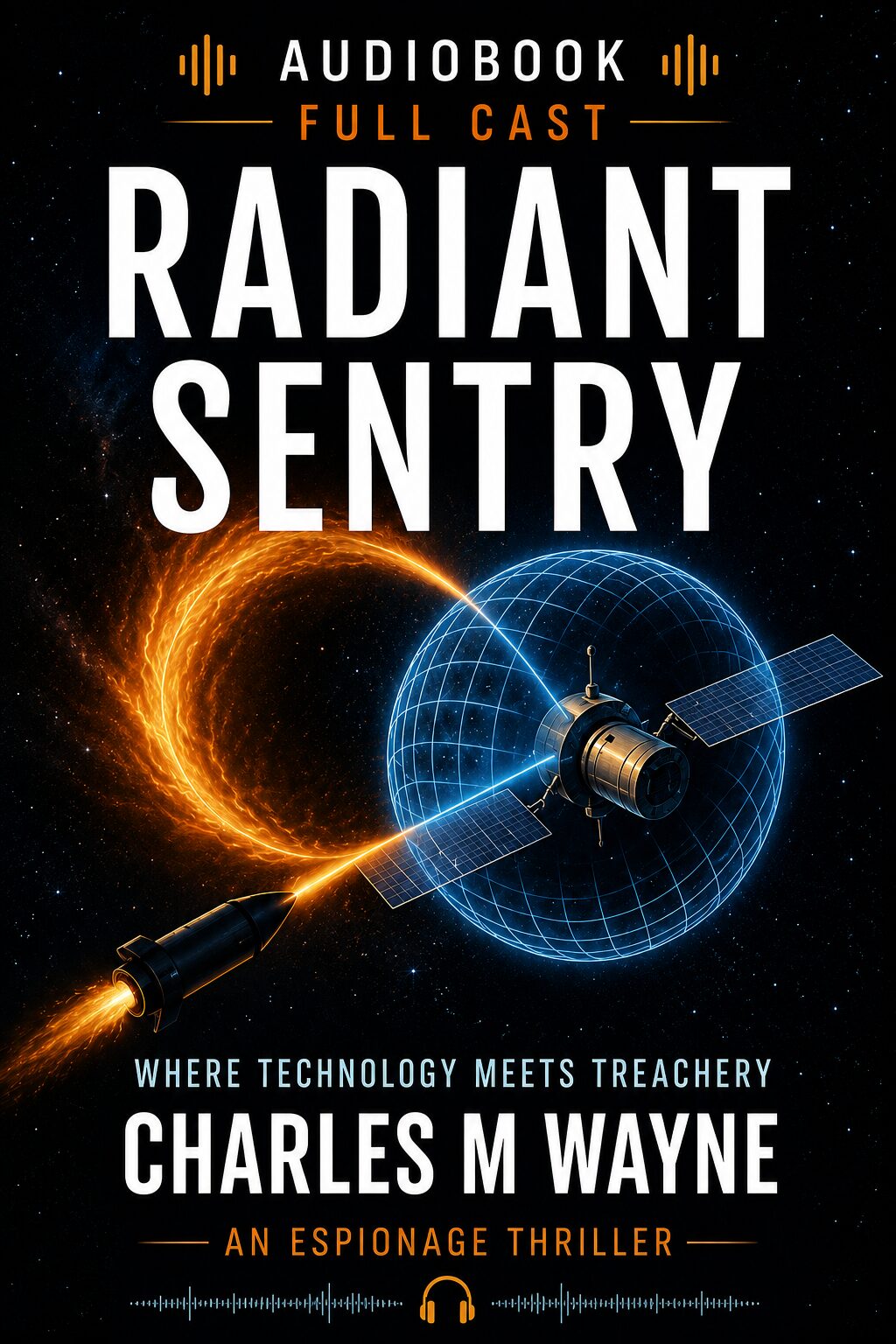
Full cast audio book.
Publishing Date June 30, 2026

Watchtower
Free Espionage Puzzles

Contact Publisher
publisher@dragonfly.associates

Contact Author
author@spyscribe.com